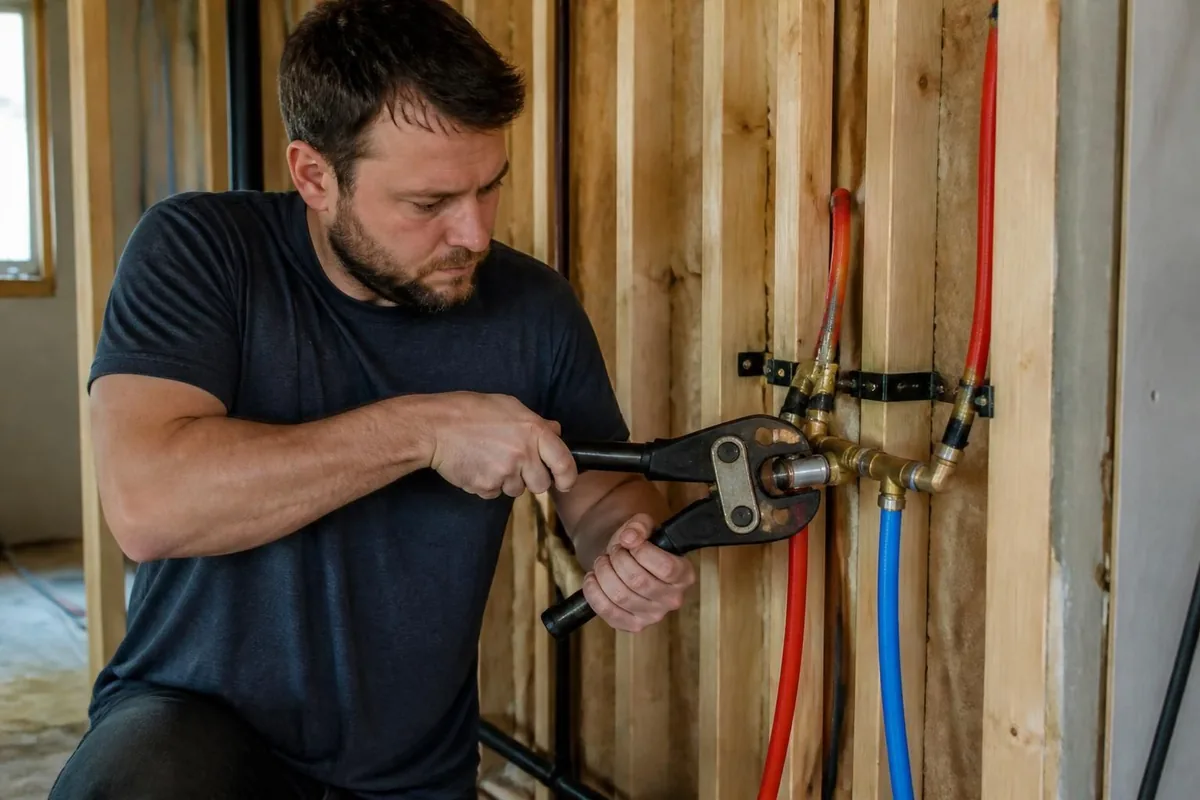
In Salisbury, where more than half the homes were built before 1980, repiping usually means pulling out galvanized steel or aging copper and running new PEX or copper to every fixture. It is worth considering when leaks keep coming back in new spots or water from the older lines runs rusty. Call the number on this page to be connected with a local plumber in Salisbury.
Warning signs worth taking seriously
- Rust-tinted water from the hot or cold side, especially first thing in the morning
- A shower that weakens badly whenever a toilet refills or the washer starts
- Threaded gray steel pipe in the crawl space with drips or rust stains at the joints
- Three or more leak repairs on different runs within a few years
- A ceiling stain under a bathroom that was already patched once
One leak is a repair. A pattern of them, on pipe that is decades old, points to the material wearing out from the inside.
What makes Salisbury different
Salisbury has one of the older housing stocks in this part of the Piedmont. Census survey figures put the median home at 1976, with about 55% built before 1980 and roughly 14% before 1940, and the city has 10 National Register historic districts. Houses from those eras were commonly plumbed with galvanized steel, which corrodes and narrows over time, and many have since been patched with copper or plastic here and there, leaving a mix of materials under the floor.
Water comes from Salisbury-Rowan Utilities, which draws from the Yadkin River and disinfects with chlorine rather than chloramine. SRU adds a corrosion-control treatment and reports that its service line inventory found no lead or galvanized lines needing replacement. SRU maintains the pipe from the street main to the meter; the line from the meter to the house, and everything inside, belongs to the owner. One more local detail: SRU has fitted new customer meters with check valves since 1988 and recommends a thermal expansion tank where one is present, which a plumber may fold into a repipe that reconnects the water heater.
What moves the price
- Size and layout. More bathrooms and longer runs mean more pipe and more fittings.
- Access. A raised foundation with a roomy crawl space is far easier to work in than plaster walls with nothing open below.
- Material. PEX usually takes fewer labor hours than copper.
- Historic finishes. Plaster, original trim or tile can slow the work and change how openings are made and patched.
- Extras. Replacing the meter-to-house line, adding shutoff valves or an expansion tank adds to the job.
When you call
You'll be connected with an independent local plumber who works in Salisbury. Be ready to say roughly when the house was built, what pipe you can see, and where it has leaked. Plumbing permits here come from Rowan County Building Inspections, which handles code enforcement for the city; the plumber can explain what the job requires and usually arranges the permit.
Repiping questions in Salisbury
Why do older homes with galvanized pipe lose water pressure?
Who is responsible for the water line between the meter and the house?
Will the plumber have to open walls and ceilings?
Can we keep living in the house while it's being repiped?
More plumbing services in Salisbury
Repiping nearby
Helpful guides
Sources
- Salisbury housing by year built (ACS, via Point2Homes)
- Salisbury, North Carolina (Wikipedia)
- Salisbury-Rowan Utilities: About Us
- Salisbury-Rowan Utilities: Water Quality
- Salisbury-Rowan Utilities customer service and service line responsibility
- Salisbury-Rowan Utilities backflow and cross-connection prevention
- Rowan County Building Inspections fee schedule
- Salisbury Post: county inspections coverage
Last updated: