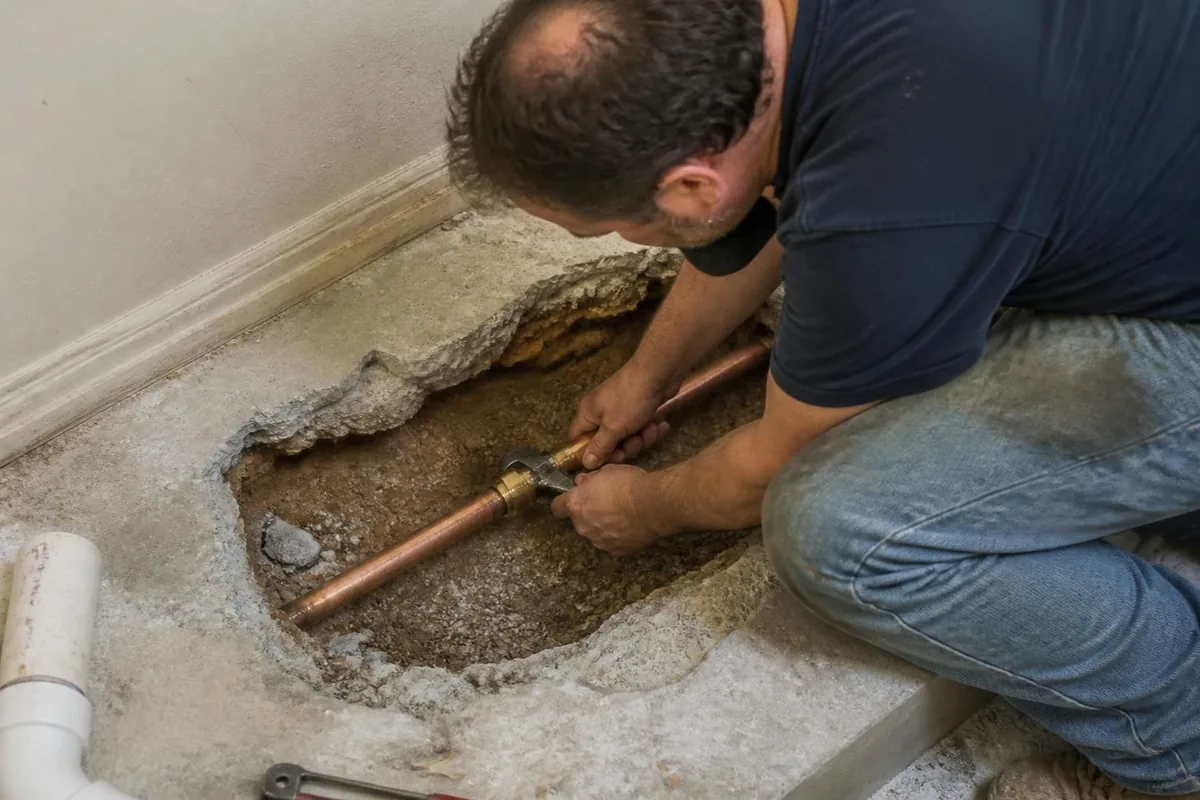
In Lexington, a slab leak is a supply line leaking beneath a concrete floor, and with about two-thirds of the city's homes built before 1980, the bigger question is often whether to patch one spot or move the plumbing above the floor. A plumber confirms the leak, finds it and lays out those options. Call the number on this page to be connected with a local plumber in Lexington.
Lexington's housing and water
Lexington has one of the oldest housing stocks in the area. Census survey data gives a median build year of 1969, with about 68% of homes built before 1980 and roughly 14% before 1940. Houses of that era in North Carolina mill towns were commonly built over crawl spaces, so slab foundations are more typical of the post-war ranches and later neighborhoods, plus any den or garage that was poured on grade later.
Water comes from the City of Lexington's own system, fed by Lake Thom-A-Lex and treated with chlorine. Its 2025 report shows no violations, a lead 90th percentile of 0 ppb and copper at 0.3 ppm at the 90th percentile, and the City keeps a full service line inventory online. The report says residents share responsibility for home plumbing but doesn't spell out where the City's side of the service line ends, so treat anything under your floor as private plumbing.
Choosing a repair
| Approach | When it fits | Trade-off |
|---|---|---|
| Spot repair through the slab | One leak, pipe otherwise sound, location pinned closely | Concrete and flooring must be opened and patched |
| Reroute the line | The buried run is hard to reach or likely to fail again | New pipe runs through walls, ceiling or attic, with drywall repair |
| Repipe the house | Repeated leaks, or old pipe throughout an older home | Largest job, but replaces the weak links at once |
In a 1950s or 1960s house, ask the plumber what the rest of the piping looks like before deciding. One leak in tired copper is often not the last.
Signs it's under the floor
- The meter keeps registering with all water off
- A warm or damp strip of floor between the water heater and a bathroom
- Cracked tile or grout that wasn't there last season
- Water sounds behind a wall when nothing is running
Timing
A slab leak doesn't fix itself, and water moving under concrete can soften the soil beneath it over time. Winter often makes a hot-line leak easier to notice, because the warm spot stands out on an otherwise cold floor. In summer, high irrigation use can hide a slow leak on the bill, so a meter test with everything off is the better check. In either season, a sudden jump on the bill is worth a test the same week.
If the repair involves new piping, the City of Lexington's permitting office handles plumbing permit applications through its online Permit Portal.
Slab Leak Repair questions in Lexington
Our house is older. Does that make a slab leak more likely?
Who handles permits for slab leak repair here?
Is a leak between the water meter and the house my responsibility?
Will the plumber have to break up my floor?
More plumbing services in Lexington
Slab Leak Repair nearby
Helpful guides
Sources
Last updated: