The City of Lexington's cross-connection policy requires backflow protection, RPZ-type, on every irrigation system, residential ones included, and the device must be tested at least once a year by a City-approved certified tester at the owner's cost. Other single-family homes are generally exempt unless something like a pool is added. Call the number on this page to be connected with a local plumber in Lexington.
How Lexington's backflow policy works
Lexington runs its own water system, along with sewer, electric and natural gas, and its Water Resources Department publishes a Cross-Connection, Backflow and Back-Siphonage Control Policy. Devices at the service connection must be tested at least annually by a certified tester the City has approved, and the customer pays for the test. The policy is stricter than many in the region on one point: every irrigation system, including one at a single-family home, needs RPZ-type protection.
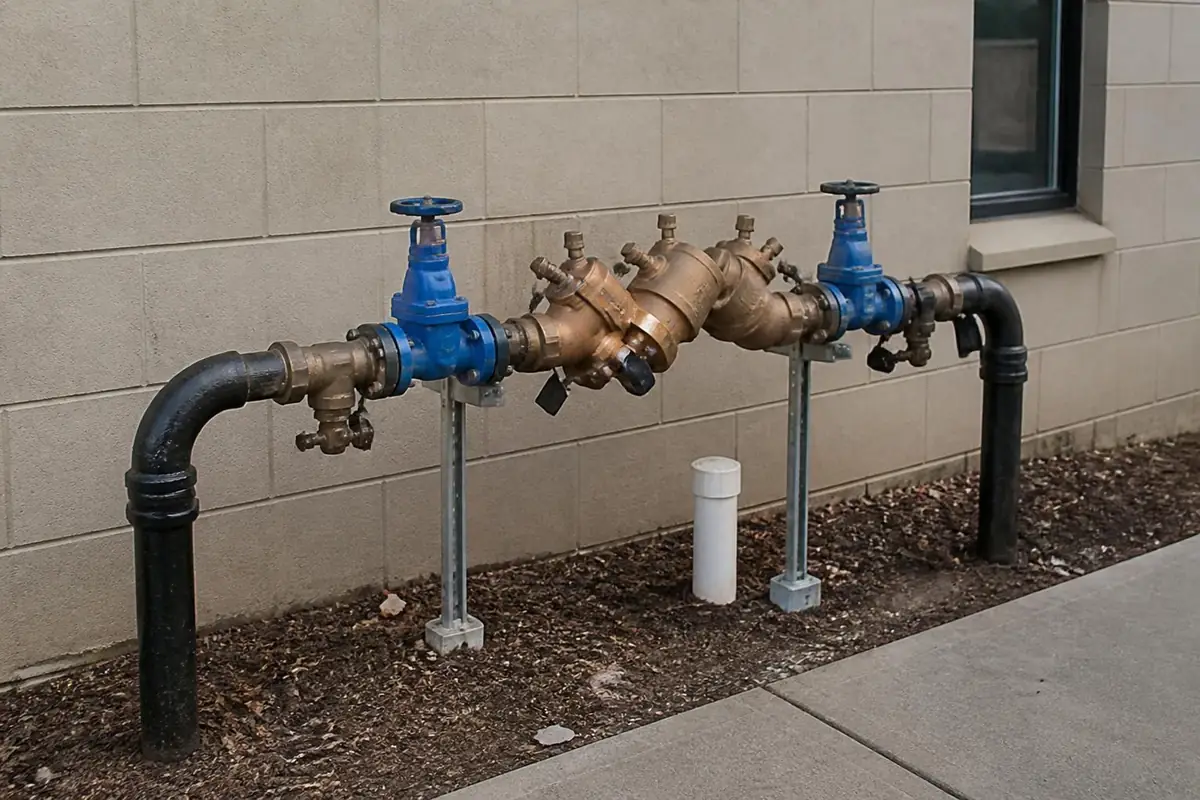
An RPZ, or reduced pressure zone assembly, has two check valves with a relief valve between them that opens and dumps water if either check leaks. It is the most protective common device, and it has to be installed above ground with room for that relief water to drain. Most Lexington houses without irrigation are exempt, but the City may require a device if a pool is added.
Lexington's housing is old, with a median build year of 1969 and about two-thirds of homes built before 1980. Many of those lots have irrigation added years after the house was built, and that retrofit is often where an assembly is missing or set up wrong. Permits for plumbing work go through the City's online Permit Portal at City Hall on West Center Street.
| Your situation | What Lexington's policy says |
|---|---|
| Single-family home, no irrigation or pool | Generally exempt from a backflow device |
| Any irrigation system, residential or commercial | RPZ-type protection required, tested at least yearly |
| Adding a pool | The City may require a device |
| Device at the service connection | Tested by a City-approved certified tester at the customer's cost |
Signs your assembly needs attention
- The relief port on the RPZ discharges water while sprinklers are off
- Your annual test date has passed with no tester booked
- Zones lost pressure after the first cold snap of the season
- You're putting in sprinklers or a pool fill line
- A tester reported a failed check or relief valve
Timing through the year
Late winter and early spring are the easy time to test, before irrigation runs hard and before testers' calendars fill. An RPZ sits outdoors above ground, so a hard freeze is its main threat: an insulated cover, or draining it per the maker's instructions, prevents most split bodies. If you're adding irrigation, plan the RPZ location early so the relief water has a safe place to go, away from the foundation and walkways.
Backflow Testing questions in Lexington
Can adding a pool or hot tub change my backflow requirements?
Why does a lawn sprinkler system need a backflow assembly?
Who is allowed to perform the test?
What if the assembly doesn't pass?
More plumbing services in Lexington
Backflow Testing nearby
Helpful guides
Sources
Last updated: