Lexington's housing is old by regional standards, and older crawl spaces are where sump pumps tend to work hardest and fail first, usually at the float, the check valve or the motor. A plumber can repair or replace the pump and help you choose a backup that fits your house. Call the number on this page to be connected with a local plumber in Lexington.
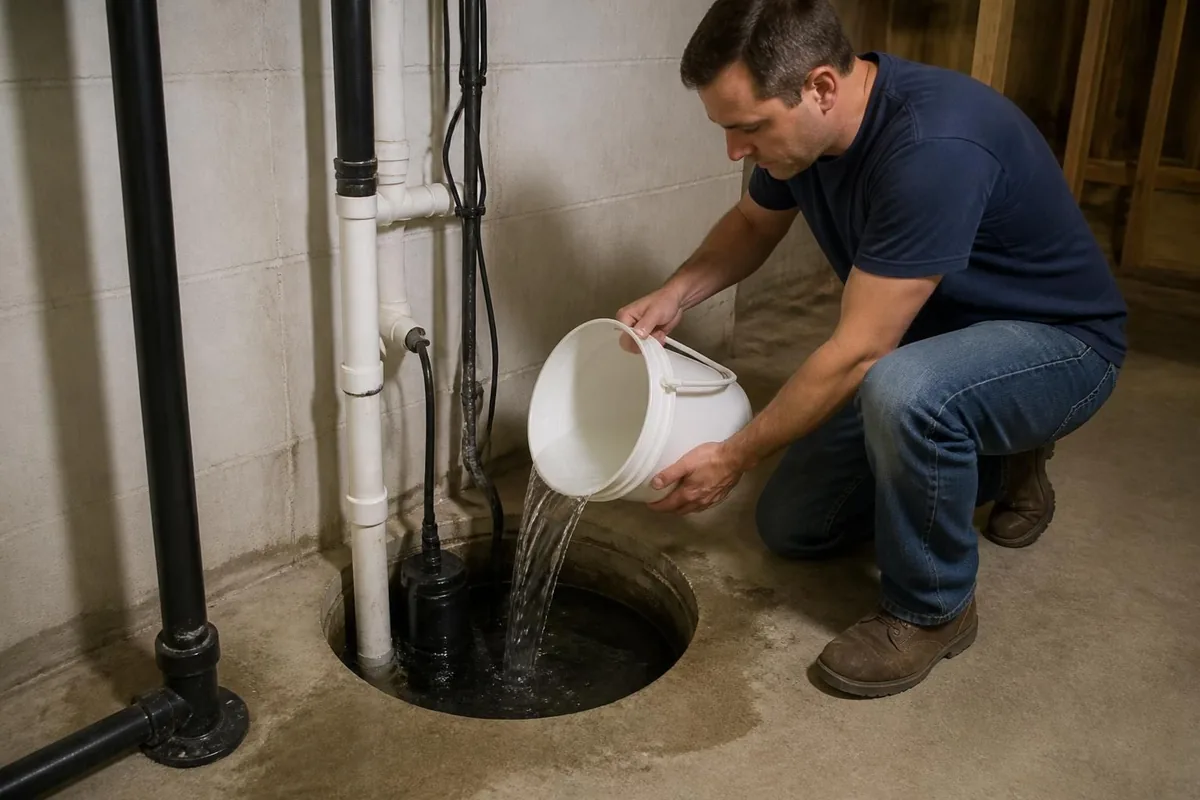
Why Lexington crawl spaces get wet
About two-thirds of Lexington homes were built before 1980, with a median build year of 1969 and roughly 14% dating to before 1940, according to Census survey figures. That includes houses in the Erlanger Mill Village and the residential historic districts near uptown. Older foundations have had decades for gutters to fail and soil to settle, and many pumps in these homes were added later by owners chasing a damp crawl space.
The City of Lexington runs the water and sewer systems, and its Glendale Road plant treats the city's wastewater. Sump water is groundwater, so it should not go into a floor drain, laundry line or cleanout that feeds that sewer. Pipe it outside and let it drain away from the house.
If you are thinking about a backup that runs on water pressure, note that the City's cross-connection policy requires backflow devices at the service connection to be tested at least once a year by a City-approved tester, and the City can require a device on a single-family home in some cases. Ask the plumber what a water-powered backup would mean under that policy before you buy one.
Backup options compared
| Option | Runs on | Good fit when | Watch for |
|---|---|---|---|
| Battery backup pump | A charged battery | Power outages during storms are the main worry | Batteries need checking and eventual replacement |
| Water-powered backup | City water pressure | You want a backup with no battery to maintain | Uses drinking water and needs backflow protection |
| Second primary pump | Household power | One pump can't handle heavy inflow | Does nothing in an outage |
| High-water alarm | Battery or outlet | Any setup | Warns you but moves no water |
Signs to act on
- The float is stuck against the pit wall or tangled in the cord
- The pump hums but water stays put
- Rapid cycling during or after a rain
- Water falls back into the pit when it shuts off
- Rust, cracked lid or debris packed around the intake
- Sagging insulation or a musty smell under the floor
Timing and seasons
Spring storms and the remnants of tropical systems in late summer and fall are when Davidson County pumps get their hardest workouts. Test the pump before those seasons, not during them. In winter, a discharge line that holds water can freeze where it leaves the house, so make sure it drains fully and slopes away. If the pump is past its expected life, replacing it on a dry week costs less stress than an emergency call during a downpour. Lexington handles permit applications through its online Permit Portal, so if the job includes a new pit or circuit, the plumber can tell you whether to file.
Sump Pumps questions in Lexington
Can sump water be piped into a sink, floor drain or sewer cleanout?
Why would a water-powered backup need backflow protection?
Why does the sump pit smell bad?
When is a sump pump due for replacement?
More plumbing services in Lexington
Sump Pumps nearby
Helpful guides
Sources
Last updated: